Caring for Health During the Holidays: What Research Teaches Us About This Season

The holidays are a time of gathering, reflection, and gratitude. They’re also a time when routines shift, stress levels rise, and health can quietly move to the background.
At Kalo Clinical Research, we see the holidays as a reminder of why people-first science matters. Behind every data point is a real person navigating family commitments, financial pressures, cultural traditions, and personal health, all at once.
Understanding how the holidays affect health helps researchers, providers, and communities move through this season with more compassion and awareness.
The Holidays and Health: What the Data Shows
Research consistently shows that the holiday season can influence both physical and mental health:
Emergency room visits tend to increase in late December, often related to stress, heart health, and disrupted routines.
Studies have found that heart-related events rise during the last two weeks of the year, linked to stress, changes in diet, sleep disruption, and colder weather.
Mental health challenges, including anxiety and depression, often intensify during the holidays — especially for caregivers, elders, and those managing chronic conditions.
Many people delay routine care in December, planning to “start fresh” in January — which can unintentionally worsen existing conditions.
These patterns aren’t about individual failure. They reflect how deeply our health is connected to environment, timing, access, and support.
Why This Season Matters in Clinical Research
Clinical research doesn’t pause for the holidays and neither does the responsibility to protect people.
This time of year highlights why inclusive, real-world data matters. Health doesn’t exist in controlled environments alone. It exists during late nights, shared meals, financial strain, caregiving, travel, and grief. These are often amplified in December.
When research includes people from diverse backgrounds and lived experiences, it better reflects how treatments work in real life, not just ideal conditions.
That’s why ethical, community-centered research remains essential year-round.
Gentle Health Reminders for the Holidays
While everyone’s situation is different, research and healthcare teams often emphasize a few simple, supportive principles during this season:
Consistency Over Perfection
Small, steady habits — like hydration, gentle movement, or medication routines — matter more than strict resolutions.
Rest Supports Health
Sleep and moments of quiet help regulate stress, immune function, and heart health.
Connection Is Protective
Social connection, even brief check-ins, is linked to better mental and emotional wellbeing.
Understanding Builds Trust
Asking questions, in healthcare or research, empowers people to make informed decisions without pressure.
These aren’t rules. They are reminders that health is not all-or-nothing, even during busy seasons.
Gratitude at the Heart of Progress
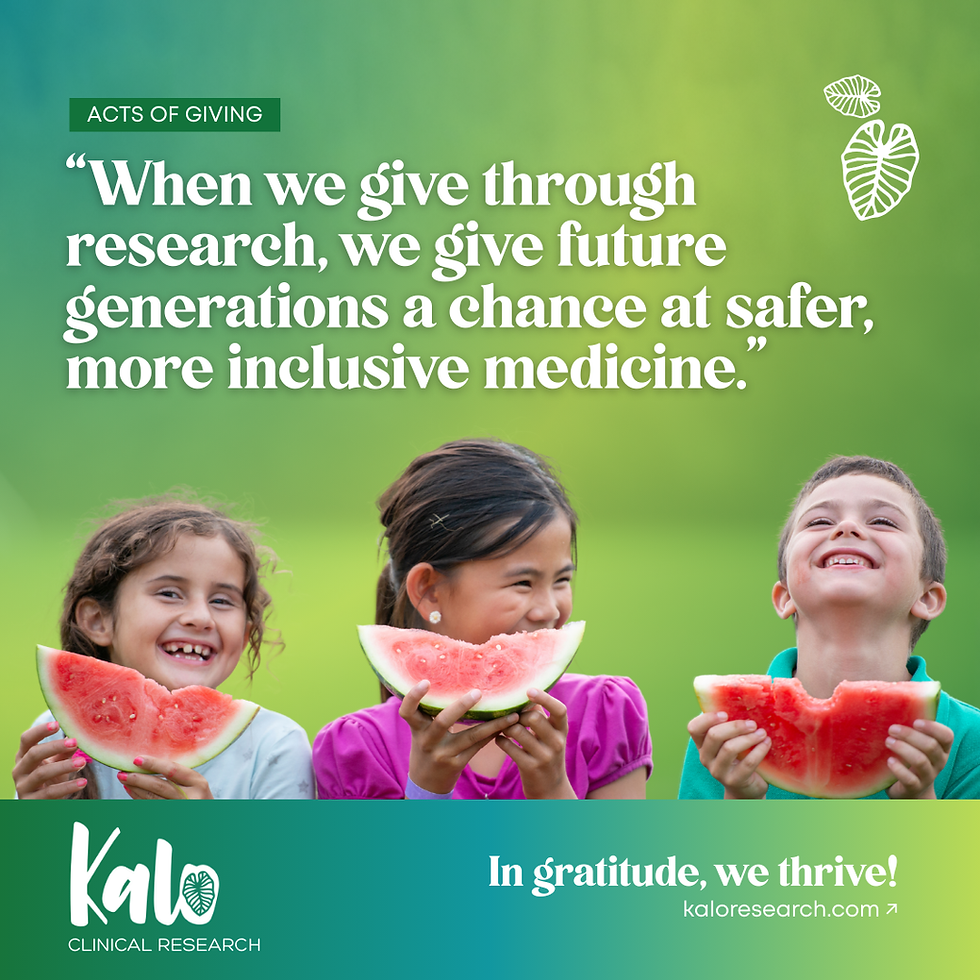
At Kalo Clinical Research, we’re especially grateful during the holidays. We're grateful for the participants who choose to be part of research, the families who support them, and the communities who trust us.
Every advancement in medicine is built on human generosity, courage, and care. This season gives us space to pause and honor that truth.
As we move toward a new year, we remain committed to ethical, inclusive research that respects people not just as participants — but as whole human beings.
In gratitude, we thrive!