


How to Find a Clinical Trial: Where to Start.
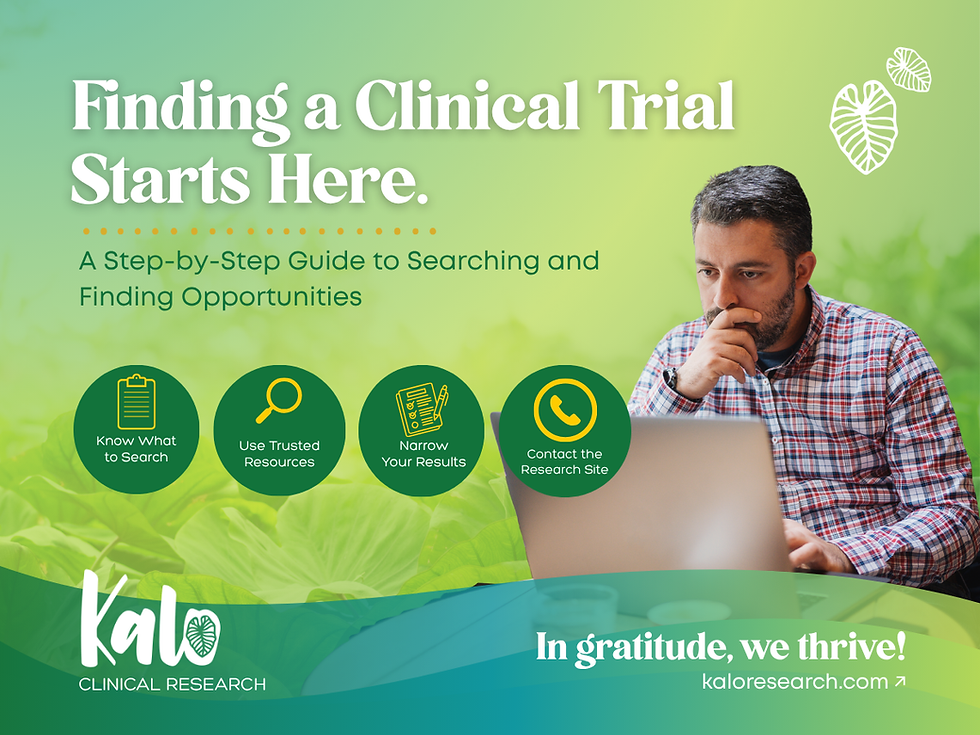
Searching for a clinical trial can bring up hundreds or even thousands of results. The challenge is not simply finding studies. It is knowing how to search, what information matters, and how to narrow your results into something useful.
If you are interested in exploring clinical research for yourself or someone you care about, here are some practical steps to help you get started.
1. Know What You're Searching For
Before opening a clinical trial database, gather a few basic details that can help make your search more specific.
Start with the name of the condition or diagnosis you are researching. It can also be helpful to know relevant information such as age, previous treatments, current medications, and how far you are willing or able to travel.
You do not need to determine whether you qualify for a study yourself. The goal at this point is simply to have enough information to begin a focused search.
2. Use Trusted Clinical Trial Resources
Instead of relying only on a general internet search, start with established clinical research resources.
ClinicalTrials.gov is maintained by the U.S. National Library of Medicine and provides information about clinical studies taking place in the United States and around the world.
Other resources include the World Health Organization's International Clinical Trials Registry Platform, the European Union's clinical trial search, and CISCRP's free clinical trial search service.
You can also explore clinical trial opportunities available at Kalo Clinical Research to learn more about studies that may be a potential fit.
3. Learn What You're Looking At
Clinical trial listings contain a lot of information, and some of the terminology may be unfamiliar at first.
A few details are especially helpful when reviewing a study:
Recruitment status: Is the study currently looking for participants?
Condition: What disease, diagnosis, or health topic is being studied?
Eligibility criteria: What general requirements must participants meet?
Location: Where are study visits taking place?
Study purpose: What are researchers trying to learn?
Contact information: Who can you reach for additional information?
You may also see an NCT number on ClinicalTrials.gov. This is a unique identification number assigned to a registered study and can make it easier to find the same trial again.
4. Narrow Your Search
A broad search can quickly become overwhelming. Filters can help you focus on studies that are more relevant to what you are looking for.
Depending on the resource you are using, you may be able to narrow results by condition, age, location, recruitment status, study type, or other criteria.
You do not have to read every study that appears. Start by identifying a handful that seem relevant and look more closely at those.
5. Keep Track of Studies That Interest You
Once you begin finding possibilities, create a simple list so you do not have to repeat your search each time.
For each study, consider saving the study title, NCT number if available, research site and location, contact information, and any questions you want to ask.
This can also make it easier to compare studies and discuss what you find with your healthcare provider or someone you trust.
6. Contact the Research Site
If a study catches your attention, the next step is to contact the research site listed for the trial.
You are not expected to know whether you qualify before reaching out. The research team can provide more information about the study, answer questions, and explain the site's process for determining whether someone may be eligible.
Finding an interesting study is simply an opportunity to learn more. It is not a commitment to participate.
Start With Reliable Information
Finding a clinical trial becomes much more manageable when you know how to approach the search. Start with reliable resources, use filters to narrow the possibilities, keep track of studies that interest you, and reach out when you are ready for more information.
At Kalo Clinical Research, we believe people should have access to clear information about clinical research and opportunities available in their community.
Looking for a clinical trial? Explore Kalo Clinical Research's current studies to see what is enrolling now and connect with our team to learn more.
This article was informed by educational resources from the Center for Information and Study on Clinical Research Participation (CISCRP), an independent nonprofit focused on clinical research education and engagement. CISCRP does not conduct clinical research or recruit participants for clinical trials.


