


From Malaria to Mauveine to Life-Saving Drugs
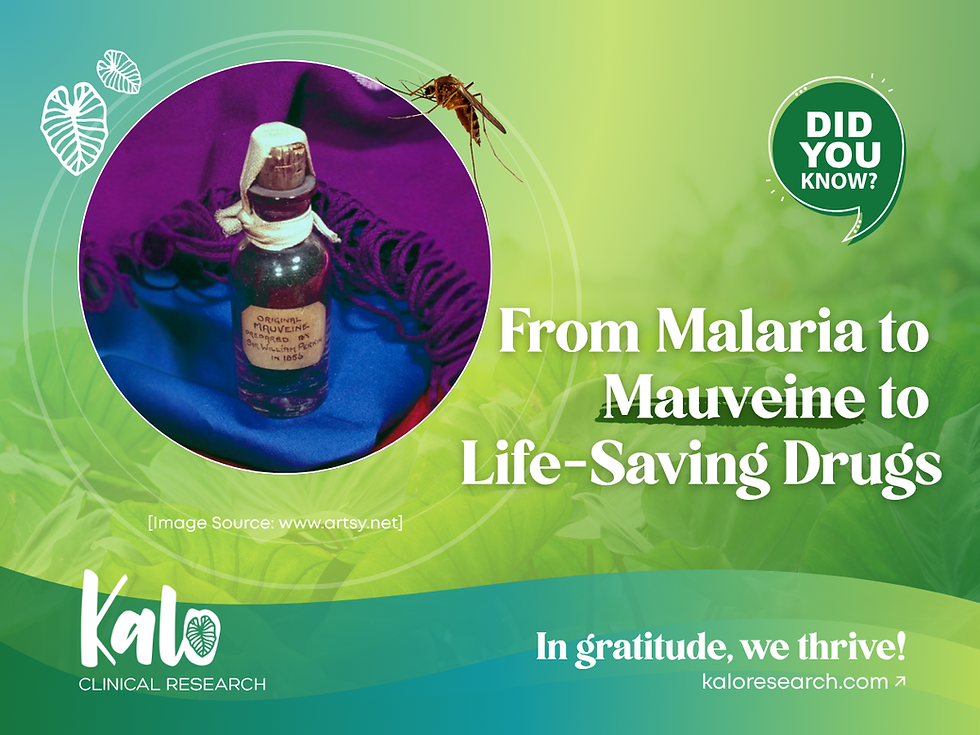
In 1856, a young chemist named William Henry Perkin tried to create a treatment for malaria but accidentally invented a bright purple dye called Mauveine. While it didn't cure malaria, this "mistake" launched the entire synthetic drug industry. It reminds us that in research, every result is a step toward progress, and listening to the data—even when it's unexpected—is how we discover the treatments of tomorrow.
What is Mauveine and why does it matter to medicine?
In the mid-1800s, medicine was very different than it is today. If you were sick, most treatments came directly from plants or tree bark. A teenager named William Henry Perkin was working in a lab trying to find a way to make quinine—a medicine used to treat malaria—out of common chemicals.
He didn't succeed in making the medicine, but he noticed a beautiful, deep purple sludge left over in his flask. This was Mauveine, the world's first synthetic dye. While it started as a fashion craze that changed the way people dressed, it did something much more important for our health.
How did a purple dye lead to the pharmacy?
Scientists soon realized that if they could create colors in a lab, they could also create molecules that fight germs. This "purple accident" gave birth to the pharmaceutical industry. Researchers began using these new dyes to stain cells under a microscope, which allowed them to see exactly how diseases affected the human body.
Eventually, those same chemical techniques led to the creation of the first antibiotics and even common medicines like aspirin. It showed the world that we could build solutions for the human body from the ground up.
Why do we still talk about this in West Valley today?
At Kalo Clinical Research, we look at the story of Mauveine as a reminder of why we do what we do. Research is about asking "what if" and staying committed to the truth, even when the answers surprise us. Every clinical trial we conduct here in Utah is part of that same long history of discovery.
We believe that for medicine to truly work, it has to be tested with the people who will actually use it. Just like the scientists of the past, we are looking for the next big breakthrough, but we do it with a focus on our neighbors and our community.
Your role in the next great discovery
Clinical research isn't just for scientists in white coats; it’s for all of us. When you participate in a study, you are helping to refine the treatments of the future. You are making sure that the medicine of tomorrow is safe and effective for everyone, including underrepresented communities who have been left out for too long.
Research starts with a question, but it succeeds because of people like you. We are here to make sure you feel safe, respected, and heard every step of the way.
In gratitude, we thrive!


